
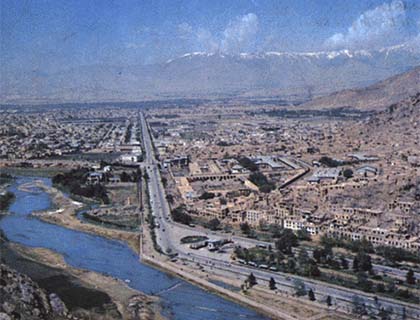
KABUL - Implanting saplings, construction of roads and streets have decreased air pollution in Kabul city in compare with the past three years, said the Kabul Mayor, Mohammad Younus Nawandish, but the municipality was mulling to construct more streets and roads in a bid to gain more success in this regard.
Nawandish told lawmakers in the Upper House on Sunday that according to information of the National Environment Protection Agency (NEPA), suspended materials or aerosol have dropped at many extend in the city’s air.
“There were around 300 micrograms suspended materials or aerosol in one cubic meter air of Kabul three years ago. This was measured by the NEPA. Nowadays, the aerosol amount has dropped to 152 micrograms in one cubic meter air of the city. Asphalting of Kabul roads and implanting saplings in the city are the main reasons behind this success,” he added.
He mentioned that they have planned to construct more roads and streets in Kabul as this would help us in making the city clean.
The Kabul mayor speaks of low air pollution in Kabul city at a time that the city residents still criticize the municipality for lack of attention on construction of roads and streets in the city and say that Kabul’s air is still polluted.
The NEPA recently warned that Kabul would be no more suitable place for living in coming years if related organs did not pay attention to take measures for controlling air pollution in the city.
In the meantime, the director of canalization and water supply of Kabul, Dad Mohammad Baheer, said that Kabul’s underground water level has decreased as a result of increasing population in the city.
He told senators that around seven million people are living in Kabul and this shrinks level of underground water in the city.
He termed using of drinking water for agriculture, draught, digging of unplanned wells and increasing of population as main reasons behind this challenge. (Agencies)