The hotly debated issues and serious rhetoric about negotiation of peace in national and international media have not mitigated militancy or persuaded the Taliban elements to come to peace table. On the contrary, warring factions have mushroomed and widened their realm of influence. Afghanistan is, particularly, left at the mercy of terrorism and a large number of soldiers and civilians were killed within the last two years as a result of the Taliban’s heavy offensives.
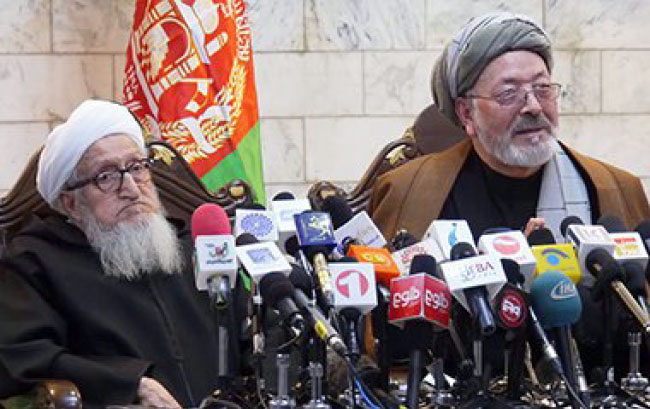
Addressing a conference titled “Common approaches to future and preparation for peace in Afghanistan” organized by EU mission in Kabul, the Chief Executive Officer (CEO) Dr. Abdullah Abdullah said that working for peace in Afghanistan “is harder than fighting” but the government would pursue the path for peace and stability. In fact, militancy is a chronic problem and has turned into an incurable wound which bleeds incessantly. In other words, this unbreakable deadlock challenges not only the National Unity Government (NUG) but also the international community. The Kabul administration put all the egg in the same basket for more than a decade without a palpable result.
Following the 2014 presidential election, the controversy over its result and its postponement, due to nontransparent election, shattered the hope of the public and created a sense of mistrust between the state and nation. But the establishment of the NUG as a political agreement instilled a fresh hope in nation and people dreamed of a violence-free government where they could exercise their rights and liberty without barrier. President Ghani’s symbolic acts – as he did improvised check on hospitals and police stations for being sure of their sincere services – compounded the nation’s hope and trust.
To one’s unmitigated chagrin, violence and bloodshed did not come to an end and Afghan nation, mainly women and children, fell victim to terrorism. Omar’s both successors, the late Mullah Mansour and Mullah Haibatullah refused to hold talks and orchestrated heavy attacks against Afghan government.
Haibatullah is publicly known as a radical clergy with parochial mindsets who refuses to present in media. Fearing to be introduced negatively, the Afghan Taliban on Wednesday released a profile of Haibtullah months after he was named the group’s chief. The profile detailed Haibtullah’s role during Afghanistan’s invasion in 2001 and after the deaths of Mullah Omar and Mullah Mansour. The new chief is a strong advocate of Islamic unity, disavowing differences of ideology between Shiites and Sunnis, the profile added. “All key figures and field commanders unanimously supported the new emir while pledges of allegiance and oath of fighting against the invaders and their foreign allied and internal mercenary forces were received from all 34 provinces,” the profile read.
Meanwhile, when asked as to why the Taliban released the profile nearly seven month of his nomination, Taliban spokesperson Zabihullah Mujahid said that it had been done to counter any move to disseminate erroneous information about the leader. “We prepared an informative piece to share correct information and stop the spread of false information,” Mujahid is cited as saying.
Haibtullah was named chief by members of the group’s leading council following Mullah Akhtar Mansour’s death in a US drone strike on May 21. Sirajuddin Haqqani, alias Khalifa and Maulvi Yaqoob Mujahid, late Mullah Omar’s son, were appointed his deputies on the occasion.
With Sirajuddin’s appointment as Haibatullah’s deputy, it is most likely that the Taliban fighters organize common attacks along with Haqqani network. Hence, Afghanistan is particularly exposed to the trilateral threat of the Taliban, al-Qaeda and the self-styled Islamic State of Iraq and the Levant (ISIL). The ISIL group practices upon more radical ideology and will never succumb to the peace offering of the Kabul administration. They performed more violent acts, mainly in Iraq and Syria, and sought to stoke sectarian violence in Afghanistan too through beheading men and women in the worst possible way.
The radical practices of warring parties leave no room for peace and deny the frequent calls of Afghan government for peace and stability. In spite of political barriers before peace talks, EU ambassador to Afghanistan Franz Michael Melbin said, “There is a chance for peace in Afghanistan which should be used effectively. Peace is possible in Afghanistan and the ground for it has been paved. The agreement with Hizb-i-Islami Afghanistan (HIA) shows Afghan people’s and leaders’ strong will for peace, we believe this process will succeed.” According to him, the peace process with the HIA increased people’s trust in peace, but efforts being made in this regard should not remain on paper only.
Home » Afghanistan » Peace Talks – The Unbreakable Deadlock
Peace Talks – The Unbreakable Deadlock