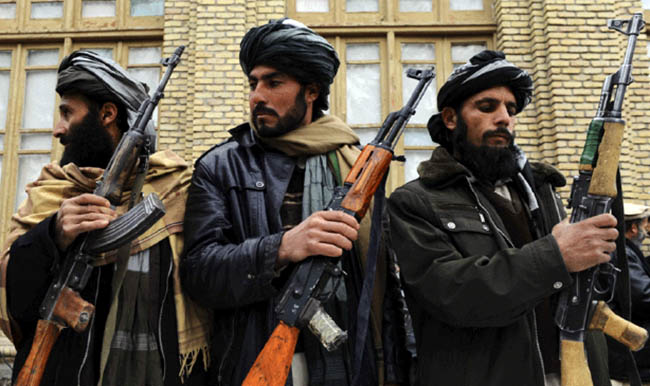
With the Taliban’s escalated militancy and high graph of combatant and non-combatant fatalities, the negotiation of peace between Afghanistan and the Taliban is still believed to break the stalemate. Mullah Haibatullah Akhundzada, the Taliban’s radical leader, seems to carry more weight than his predecessor since his appointment was not followed by a serious conflict as Mansour’s did. Mansour refused to hold talks calling it “enemy’s propaganda” and spearheaded two deadly attacks namely “spring offensive” and “Omari Operation” in Afghanistan. During his leadership, Afghan civilians sustained heavy casualties and hopes for peace talks shattered among the public.
All previous initiatives to seek a political solution to the Afghan conflict have made little or no progress in the past. Pakistan, which is seen as key to the future of Afghanistan, brokered the first-ever direct talks between the Afghan government and the Taliban in July 2015. But the process was scuttled after the confirmation of the death of Taliban Supreme leader Mullah Omar. In fact, Pakistan used coercion, ‘diplomatic’ pressure and persuasion by its proxies within the movement to achieve the limited goal of the Murree meeting. These achievements were unlikely to last or contribute to the ultimate goal – a political settlement. An authentic change of mind in as fragile a process as peace-making has to come from within the Taliban movement itself, ideally through its own mechanisms of deliberations and policy-making.
It is believed that if the Murree meeting had been a natural outgrowth of the Taliban’s internal policy-making, the movement would have most likely made sure all the various branches had been briefed. The Taliban would have taken measures before going into formal talks with the government. The most important would have been a thorough internal discussion with officials on the ground and making sure the talks were not portrayed as dictated by an external force, especially Pakistan.
Six months later, another initiative was announced involving Pakistan, Afghanistan, the US and China established to make renewed efforts for direct talks between the Ghani administration and the Afghan Taliban. The group, which was formed in December last year, was all but dead after the killing of Afghan Taliban chief Mullah Akhtar Mansoor in a US drone strike in Balochistan near the Afghan border in July this year. His radical ideology and indiscriminate attacks against the National Unity Government (NUG) was the main reason behind his death. Calling him an obstacle before the talks, the US drone targeted him to facilitate the peace negotiation. His death, however, marred the relation among the Quadrilateral Coordination Group (QCG) as Pakistan called it violation of territorial integrity.
Now, Haibatullah is playing his role. He seeks to gain the charisma of Mullah Muhammad Omar through refusing to represent in the media or be pictured. This role will give him two positive results: First, he will be held in greater respect among the Taliban’s radical fighters and carry much weight for them. Secondly, he intends to be safer and avoid being fated to Mansour’s destiny.
Sustaining heavy casualties despite the peace talks discourse; Afghan nation feels no hope for a fruitful talks anymore and deems it a political game. However, it is said that Russia will host first-ever trilateral talks involving Pakistan and China next month in an effort to crack the Afghan conundrum. It will be discussed, in the meeting, how to bring an end to the long running conflict in Afghanistan and prevent groups such as the self-styled Islamic State of Iraq and the Levant (ISIL) from gaining a foothold in the war-torn country. “The deteriorating security situation in Afghanistan has raised concerns about the spillover effect due to the presence of non-state actors and other elements there,” Pakistan’s Foreign Office spokesperson Nafees Zakaria is cited as saying. The ‘other elements’ is in fact a reference to certain regional and international powers which Pakistan, Russia and China fear might eventually use the Afghan situation to achieve their larger objectives in the region. That is why the broader context of the gathering in Moscow in the first week of December is the transformation in relationship taking place among the major international players.
In September, at the sidelines of UN General Assembly session in New York, Afghanistan, the United States and India held a first-ever trilateral meeting. The development raised eyebrows in Pakistan, which publicly questioned the motive of such an interaction.
The four-nation’s last round meeting regarding peace talks was hosted by Kabul in February, however, Russia called it “useless” and denied to take part. Representative of the Russian Ministry of Foreign Affairs said, “We are not going to participate in these useless attempts and have already told the US about it. We do not see any practical sense in it.” He added that that Russia was ready to promote its own peace plan, whose main goal was primarily to create a roadmap for restarting peace negotiations between the Taliban and the Afghan National Government (NUG). His prediction came true and the peace talks did not give the desired fruit, but will the coming meeting, which is to be hosted by Russia, bring the Taliban to peace table?
Home » Afghanistan » A New Trilateral Talk for Peace
A New Trilateral Talk for Peace