KABUL - The Integrity Watch Afghanistan (IWA) on Monday stressed dissolution of parallel anti-corruption institutes and said institutional structure of anti-corruption efforts were in conflict with the government’s commitment and international standards.
An IWA report published on Monday shows the anti-corruption structure in Afghanistan was in conflict with the government’s commitment at the London conference, the United Nations Convention against Corruption (UNCAC) and Jakarta principles on fighting corruption.
The report said there were no indications from the national unity government to establish a politics-free institute to independently fight corruption.
IWA said the government was suffering from parallel organs as a large number of institutes that operated the same tasks existed in the government.
The report said the Independent Joint Oversight and Evaluation Committee, High Audit Administrative Office, Independent Reforms and Civil Services Commission, Special Anti-corruption Court, Special Anti-Corruption Attorney Office, Major Crimes Department, Administrative Office of Financial Information, 119 police hotline, interior audit section and financial control department of the Ministry of Finance were created before the national unity
High Council of Governance and Eliminating Corruption, Anti-Corruption Justice Center, Asan Khidmat (Easy Service), Administrative Complaints Section of the Presidential Palace, National Procurement Commission (NPC) and Oversight Commission on Access to Information (OCAI) were created by the current government, the IWA report said.
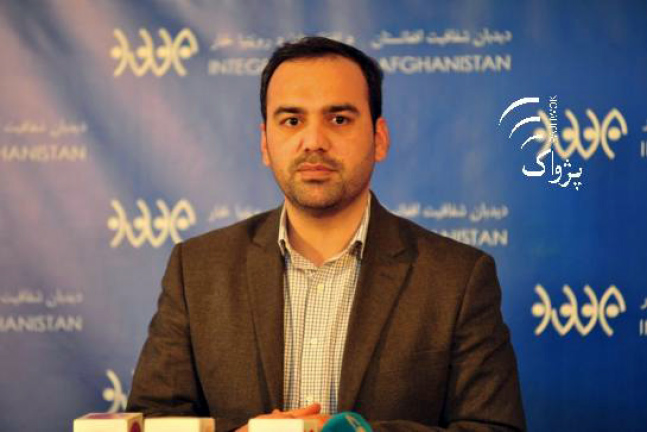
IWA head Sayed Akram Afzali told a press conference here that the report about parallel offices was prepared in the past six months.
He said the newly-created and old institutes about fighting corruption in the country were in conflict with Jakarta principles for anti-corruption agencies and UNCAC, because anti-corruption institutes must be independent and accountable.
There should be no interference from government or officials in the affairs of anti-corruption agencies which should work for punishment of criminals and public awareness, he said.
“Some institutes the government has formed such as High Anti-Corruption Council (HACC), are only symbolic and lack independence because members of these agencies are representatives of offices which are involved in corruption. The HACC is a collection of other anti-corruption institutes led by the president, it means the government is directly interfering in anti-corruption efforts,” he said.
The government in 2014 London Conference had promised to form the High Office of Oversight and Anti-Corruption (HOOAC) with representatives from civil society institutes, lawyers and former government workers, but the government did not do so, Afzali said.
He said HOOAC was not independent and had a politicized structure. The Anti-Corruption Justice Center was also created based on an urgent decision in the Warsaw Summit and after six months of its launch, the case it worked on was very unimportant, he added.
Important cases such as the Kabul Bank scandal, the case of the Ministry of Urban Development, and the firing of 150 employees of Kabul municipality have been ignored, he said.
Afzali said fighting corruption should be a priority of the government because corruption in all institutes, particularly in parliament and police questioned the government’s credibility.
Dissolving parallel institutes, creation of an independent commission for fighting corruption based on Jakarta principles and participation of lawyers and civil society representatives in anti-corruption programs were other suggestions of the IWA. (Pajhwok)
Home » Afghanistan » Parallel Anti-Graft Bodies Need to be Dissolved: IWA
Parallel Anti-Graft Bodies Need to be Dissolved: IWA