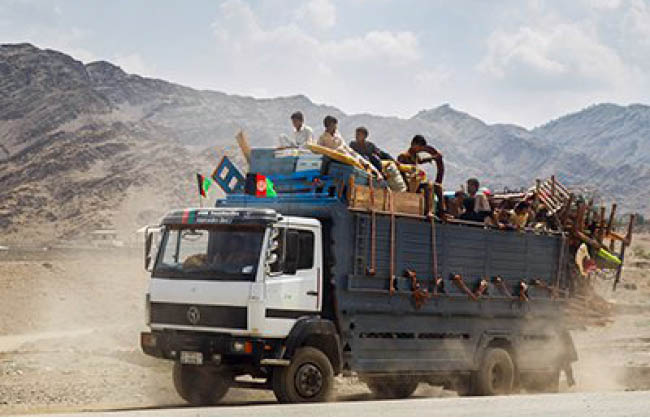
KABUL - The Afghan government and aid agencies are struggling to cope with a wave of refugees returning from Pakistan and Iran to Afghanistan.
The flow of returnees from neighboring Iran and Pakistan this year, estimated by the United Nations to number more than half a million, is straining the capacity of the government and aid agencies, even as violence uproots more Afghans around the country, Reuters reported.
At Torkham, the busiest border crossing between Afghanistan and Pakistan, nearly 170,000 Afghans have returned this year, according to the UN, many of them citing harassment by Pakistani authorities as relations between the two countries have deteriorated.
A cluster of white tents only a few hundred meters from the border marks the first facility operated by the UN, the Afghan government, and other aid agencies to provide aid for returnees before they look for a home in a country many have not seen in years.
In September, the UN issued an appeal for millions of dollars of emergency funding to help returning refugees and other internally displaced people in Afghanistan, but so far the fundraising has yet to reach its goal, said Mark Bowden, the UN's humanitarian coordinator in Afghanistan.
Islamabad has stepped up pressure to send people back and numbers have risen sharply in recent months as Afghan-Indian relations strengthened and those between India and Pakistan soured.
But Pakistani officials deny there has been systematic harassment of Afghans living in Pakistan and say their country has demonstrated great generosity to the refugee population, despite severe economic problems of its own.
While the challenges of helping the returning Afghan refugees requires immediate attention, the international community should work with Afghanistan, Pakistan, and Iran to try to solve the broader problems driving the crisis, said Tadamichi Yamamoto, head of the UN assistance mission in Afghanistan.
Home » Afghanistan » Aid Agencies Struggle to Assist Wave of Returning Refugees
Aid Agencies Struggle to Assist Wave of Returning Refugees