KABUL - Vowing to continue efforts at bringing reforms and fighting against administrative corruption, President Ashraf Ghani said on Monday Afghanistan was facing the “5th wave of international violence” which needed regional cooperation to be controlled.
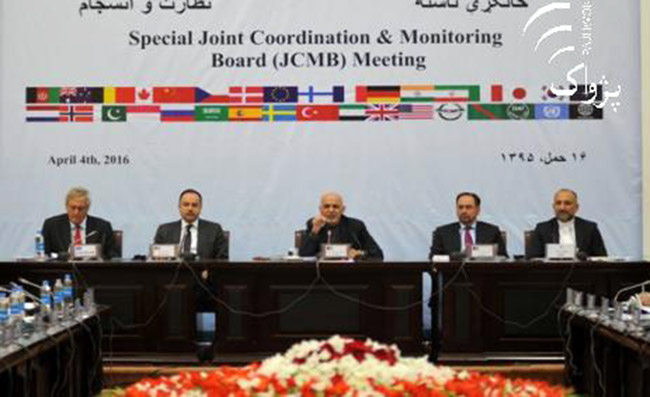
Ghani said this while presiding over the special Joint Coordination and Monitoring Board (JCMB) meeting here.
Cabinet ministers, representatives of parliament, civil society, special UN representative in Afghanistan, ambassadors and representatives of international organizations in Kabul attended the meeting aimed at evaluating recent developments and government’s activities during the past one year.
Established in 2006 in accordance with the draft of United Nations Security Council, JCMP is a decision-making body that provides a platform for strategic coordination, joint policy formulation and problem-solving in Afghanistan.
The board has so far discussed different issues such drafting joint policies, mutual accountability and better coordination through meetings with the Afghan government and donor countries.
In his opening remarks, President Ghani said Afghanistan was facing the “5th wave of international violence.”
“If we look at the previous waves, each wave lasted 20 to 30 years. Now there is the need to control the situation.”
“We are targeted by Al Qaeda, Daesh, regional terrorist groups and Pakistani Taliban, so there is need for sharing information and intelligence and a joint framework,” he said.
He said the Afghans were united when it came to the defence of their values and the Afghan government was committed and had the political will to cope with challenges.
The president insisted on regional cooperation to work jointly towards resolving issues instead of blaming each other.
The enemies of Afghanistan had been trying to overthrow the government, but they could not succeed due to the sacrifices of the Afghan security and defence forces, he said.
After the withdrawal of foreign troops from Afghanistan, the country plunged into economic challenges in addition to security problems, he said, adding the poverty index increased from 46 percent in 2013 to 49 percent in 2014 and the level of joblessness had increased nationwide.
However, he said as a result of the Afghan government’s efforts, the national revenue increased by 22 percent last year compared 2014.
He said the government also organised the budgeting system, encouraged international aid, established programmes for development of agriculture and the situation of farmers, constructed dams and improved conditions of cities.
Pashtani Bank, Milli Bank and the New Kabul Bank were now in better condition, he said, adding the National Procurement Commission (NPC) had so far assessed more than 1000 contracts with many relating to security. As a result of the assessment in the past one year, he said the government had saved 1.2 billion afghanis each month.
The government has brought some reforms to eliminate corruption especially in the judiciary and the efforts were still ongoing, he said.
“We have brought reforms and reshuffled many judges and other officials of the judiciary organs. There would be more good news in the next two weeks and we will also accelerate resolving cases by 75 percent,” he said.
A special directorate was established for judges in the affairs of women and children, he said, adding some people in. (Pajhwok)
Home » Afghanistan » We Face ‘5th Wave of International Violence’: Ghan
We Face ‘5th Wave of International Violence’: Ghan