KABUL - Experts at the London School of Economics and Political Science (LSE) have criticized the United Nation (UN)'s anti-drug policy, asking the international community to undertake new and more effective strategies in combating drug production and trafficking.
In a recent report, a five-member team of Noble Prize winners—including the British prime minister and the former US secretary of state—has pointed out the severe consequences of global drug smuggling, especially in Afghanistan.
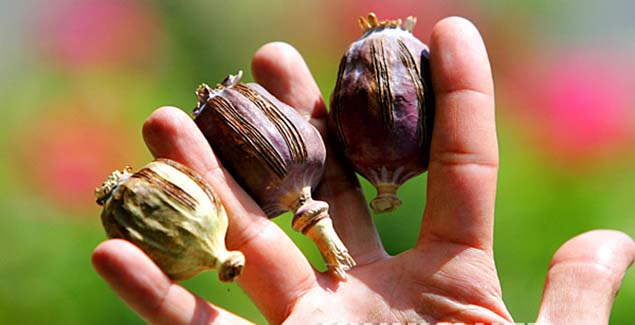
The report reveals that poppy cultivation has increased dramatically in Afghanistan, noting that the UN's military option has not proved worthwhile in eliminating the menace.
"International anti-drug strategy through military option and pressures has left negative consequences and unexpected losses," the report reads.
According to the experts, UN's failure in the war against drugs has led to an active global market worth $300 billion dollars. The experts urge world leaders to re-examine their drug policies.
The LSE report states that the prolongation of war and violence in Afghanistan have contributed in the rise of poppy cultivation and drug trafficking.
The report points out that 90 percent of the drugs in the world are produced in Afghanistan. The country has also won the title of the world's largest producer of opium 15 times.
Meanwhile, the Afghan Ministry of Counter Narcotics (MCN) has rejected the claims in the report.
"I strongly oppose the claims," says Deputy Minister of Policy for the Afghan Ministry of Counter Narcotics, Haroon Rashid Sherzad. "The government of Afghanistan has had major achievements in different sectors including arrests and treatments of drug addicts as well as capacity building programs."
Drugs processed in Afghanistan are highly in demand in European markets, particularly in London. Most of the drugs are trafficked to European countries through Turkey and Tajikistan. (Tolonews)